Address:
Uskudar Icerenkoy Yolu Cad. No:21
Atasehir, Istanbul 34752
TURKIYE
Working Hours:
Monday - Friday: 9:00 - 18:30
Weekends: Closed

Address:
Uskudar Icerenkoy Yolu Cad. No:21
Atasehir, Istanbul 34752
TURKIYE
Working Hours:
Monday - Friday: 9:00 - 18:30
Weekends: Closed

Understanding the required documents for Turkish citizenship is the cornerstone of a successful application, whether through naturalization, marriage, or more commonly, Turkish citizenship by investment.
Acquiring Turkish nationality has become one of the most attractive pathways for global investors, entrepreneurs, and families seeking mobility, security, and strategic access to international markets. At Legalixa Law Firm, a leading Turkish citizenship law firm based in Istanbul since 1992, we provide end-to-end legal support for applicants navigating Turkish citizenship law and procedures.
The documentation phase is not merely administrative; it is a legally sensitive process where precision, compliance, and proper authentication directly impact approval timelines. Many applications face delays or rejections due to incomplete, improperly notarized, or incorrectly translated documents. Therefore, working with experienced Turkish citizenship by investment lawyers and citizenship lawyers in Istanbul ensures that each document aligns with regulatory expectations.
Table of Contents
Turkish citizenship law is primarily governed by the Turkish Citizenship Law No. 5901 and its implementing regulations. The law establishes various pathways to citizenship, including exceptional acquisition through investment, which has become the most widely used route among foreign nationals.
The Turkish government has designed this framework to attract foreign capital while ensuring strict compliance with identity verification, financial transparency, and national security considerations. As a result, the required documents for Turkish citizenship serve multiple purposes, including verifying identity, confirming eligibility, and documenting the lawful origin of funds.

Turkish citizenship by investment allows foreign nationals to acquire citizenship through several investment routes, such as real estate acquisition, capital investment, or bank deposits. Regardless of the chosen pathway, applicants must submit a standardized set of documents, supplemented by investment-specific documentation.
The complexity of Turkish citizenship investment options means that documentation requirements may vary slightly depending on the investment type. However, the core set of required documents for Turkish citizenship remains consistent across all application categories.
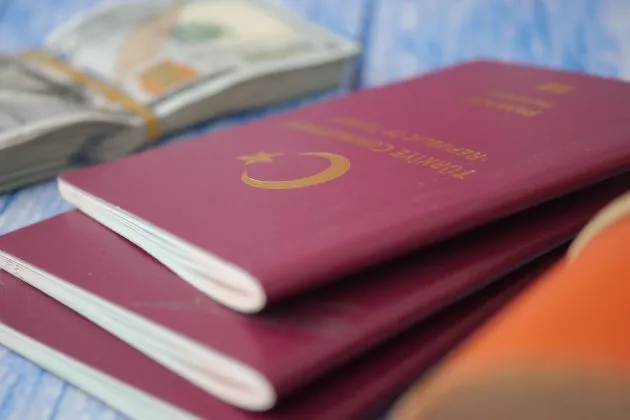
The foundation of any citizenship application begins with identity verification. Applicants must provide a valid passport, which serves as the primary identification document. The passport must be translated into Turkish and notarized to ensure legal validity before submission to the relevant authorities.
In addition to the passport, applicants are required to submit birth certificates. These documents confirm personal identity details such as name, date of birth, and place of birth. Birth certificates must be apostilled or double legalized and translated into Turkish by a sworn translator in Turkey.
What’s an apostille?
An apostille is an official certification issued under the Hague Apostille Convention that verifies the authenticity of a public document for use in another country. It confirms that the signature, seal, or stamp on a document—such as a birth certificate, marriage certificate, or criminal record—is genuine, eliminating the need for further diplomatic or consular legalization. In the context of Turkish citizenship applications, foreign-issued documents must typically be apostilled to be recognized as legally valid in Turkey before they are translated and notarized.
What’s a double legalization?
Double legalization is a document authentication method used when a country is not a party to the Hague Apostille Convention (for instance documents must be double legalized in the UAE). Instead of a single apostille certificate, the document must undergo a two-step verification process: first, it is certified by the relevant authority in the issuing country (such as the Ministry of Foreign Affairs), and then it is legalized by the Turkish consulate or embassy of the destination country. In the context of Turkish citizenship applications, this process ensures that foreign documents are officially recognized in Turkey before they are translated and notarized.
Marital status documents are also essential. Married applicants must submit a marriage certificate, while divorced applicants must provide divorce decrees. Widowed applicants are required to submit death certificates of their spouses. These documents ensure that family relationships are accurately recorded in the Turkish civil registry system.
Biometric photographs are another critical requirement. These photographs must meet strict specifications regarding size, background, and clarity, as they are used in official records and identification documents such as Turkish ID cards and passports.
Although Turkish citizenship by investment does not require long-term residency, applicants must still provide an address declaration. This document confirms the applicant’s current residence and is often supported by utility bills or official address registration documents.
In certain cases, especially for family applications, additional residency-related documentation may be requested to verify cohabitation or family unity.
A clean criminal record is a fundamental requirement under Turkish citizenship law. Applicants must obtain a criminal record certificate from their country of origin or residence. This document must be recent, apostilled, and translated into Turkish.
Turkish authorities conduct thorough background checks as part of the evaluation process. Therefore, any discrepancies or omissions in criminal record documentation can lead to delays or rejection.




Real estate investment remains the most popular route due to its accessibility and tangible asset value. Applicants must submit the title deed (Tapu), which proves ownership of the property. The property must meet the minimum investment threshold defined under Turkish citizenship investment costs.
A valuation report is mandatory and must be prepared by a government-authorized appraisal company. This report confirms that the property meets the required value criteria and prevents undervaluation or manipulation.
Additionally, applicants must provide proof of payment, typically in the form of bank transfer receipts. These documents demonstrate that the transaction was conducted legally and through official banking channels.
A commitment not to sell the property for at least three years must also be registered with the land registry. This legal annotation is a crucial component of the application.
For applicants choosing financial investment routes, such as bank deposits or capital investment, documentation requirements include bank statements, deposit certificates, and confirmation letters from the relevant financial institution.
These documents must clearly indicate that the funds have been deposited in Turkey and will be maintained for the required holding period. Transparency and traceability of funds are critical, as Turkish authorities closely scrutinize the source of funds.
Applicants investing through company formation or employment creation must provide corporate documents, including articles of association, trade registry records, and tax registration certificates.
Employment-based applications require proof that a specified number of Turkish employees have been hired. This includes social security registration documents and payroll records.
One of the major Turkish citizenship benefits is the inclusion of immediate family members in the application. Spouses and children under 18 can acquire citizenship simultaneously with the main applicant.
For spouses, required documents include passports, birth certificates, and marriage certificates. For children, birth certificates and parental consent documents are necessary, especially in cases of shared custody.
All family documents must be properly legalized and translated, ensuring consistency across all records submitted to Turkish authorities.
In cases where one parent is not included in the application, notarized consent from the non-applying parent is required. This ensures compliance with international child protection regulations.
Guardianship documents may also be required if the applicant is acting on behalf of a minor.
One of the most critical aspects of preparing the required documents for Turkish citizenship is ensuring proper authentication. Documents issued abroad must either be apostilled under the Hague Convention or legalized through the Turkish consulate.
Failure to properly authenticate documents is one of the most common reasons for application delays. Therefore, applicants must verify the authentication requirements specific to their country of origin.
All foreign-language documents must be translated into Turkish by a sworn translator. These translations must then be notarized to be accepted by Turkish authorities.
Consistency in translation is essential, as discrepancies in names, dates, or other details can trigger additional verification procedures.
Once all required documents for Turkish citizenship are prepared, the application is submitted to the relevant government authority, typically through the Provincial Directorate of Population and Citizenship Affairs.
The application file is reviewed for completeness before being forwarded for further evaluation. At this stage, even minor documentation errors can result in requests for additional information.
After submission, the application undergoes multiple levels of review, including security checks and financial verification. The timeline for approval generally ranges from three to six months, depending on the complexity of the case and the accuracy of the documentation.
Working with a Turkish citizenship law firm significantly reduces the risk of delays, as experienced legal professionals ensure that all documentation meets regulatory standards from the outset.
Applicants often underestimate the importance of document accuracy and consistency. Common mistakes include submitting expired documents, failing to obtain proper apostilles, and providing incomplete financial records.
Another frequent issue is inconsistency in personal information across different documents. Even minor discrepancies in spelling or date formats can lead to additional scrutiny.
Engaging Turkish citizenship by investment lawyers helps mitigate these risks by ensuring that all documents are reviewed and verified before submission.
The documentation process is not merely procedural; it reflects the applicant’s credibility and compliance with Turkish citizenship law. Properly prepared documents demonstrate transparency, financial integrity, and respect for legal requirements.
Given the increasing global demand for Turkish citizenship by investment, Turkish authorities have implemented stricter review processes. Therefore, meticulous preparation of the required documents for Turkish citizenship is more important than ever in 2026.

As a leading Turkish citizenship law firm, Legalixa Law Firm provides comprehensive legal services tailored to international clients. Our team of citizenship lawyers in Istanbul and multilingual consultants ensures that every document is prepared, verified, and submitted in full compliance with Turkish regulations.
We assist clients at every stage, from document collection and authentication to application filing and follow-up. Our expertise in Turkish citizenship investment options allows us to provide strategic guidance that aligns with each client’s financial and personal objectives.
Understanding the required documents for Turkish citizenship is only one part of the process. Applicants are also motivated by the substantial Turkish citizenship benefits, including visa-free travel, access to a dynamic economy, and eligibility for the E-2 investor visa in the United States.
Turkey’s strategic location, robust real estate market, and investor-friendly policies make it an attractive destination for global investors. By ensuring proper documentation, applicants can secure these benefits efficiently and without unnecessary delays.

The most important required documents for Turkish citizenship include a valid passport, birth certificate, biometric photos, criminal record certificate, and investment-related documents. Each document must be properly apostilled and translated into Turkish to ensure compliance.
While the core required documents for Turkish citizenship are consistent, additional documents vary depending on the application route. For example, real estate investors must submit title deeds and valuation reports, while business investors must provide corporate documentation.
Required documents for Turkish citizenship must be apostilled or legalized through Turkish consulates. After authentication, all documents must be translated into Turkish and notarized before submission.
Yes, errors or inconsistencies in required documents for Turkish citizenship can lead to significant delays or even rejection. Common issues include missing apostilles, incorrect translations, and incomplete financial records.
Yes, each family member included in the application must submit their own required documents for Turkish citizenship, including passports, birth certificates, and photographs. Additional documents may be required for minors.
A Turkish citizenship law firm ensures that all required documents for Turkish citizenship are accurately prepared, authenticated, and submitted. Legal professionals also coordinate with government authorities to streamline the application process.
Legalixa has been Istanbul’s leading provider of citizenship by investment law services, having successfully obtained more than 560 passports by investment for our clients.
Selcuk Akkas, Attorney at Law, Patent & Trademark Attorney & Mediator
If you are planning to apply for Turkish citizenship by investment and want to ensure a seamless process, Legalixa Law Firm is ready to assist you with unmatched expertise. Our experienced team of Turkish citizenship by investment lawyers and citizenship lawyers in Istanbul provides end-to-end legal support, from document preparation to final approval.
We understand the complexities of Turkish citizenship law and ensure that every aspect of your application is handled with precision and professionalism.
Contact Legalixa Law Firm today to receive tailored legal guidance on the required documents for Turkish citizenship and explore the most suitable Turkish citizenship investment options for your needs. Let our team help you secure your future in Turkey with confidence and efficiency.